
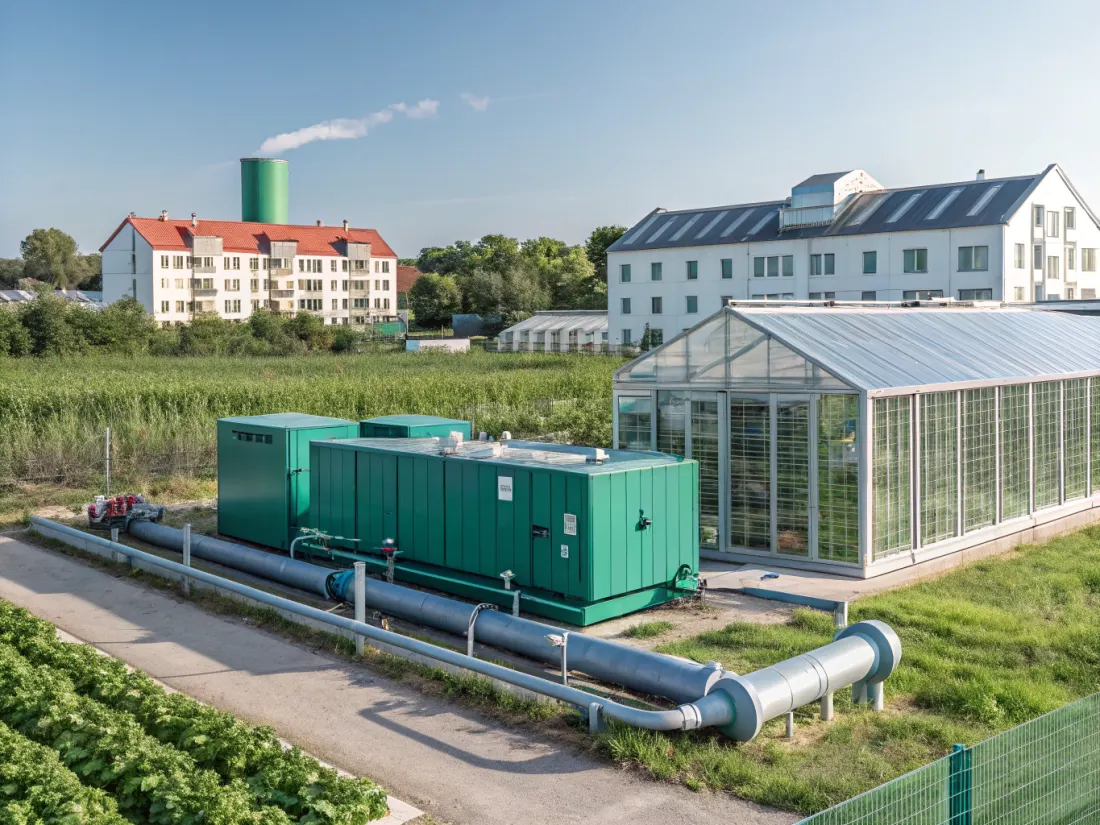
A data center turns electricity into compute… and into heat. Long seen as a loss, this waste heat is now a source of local, decarbonised energy that is already available.
What is waste heat?
It is the heat released by servers in operation. Rather than venting it into the atmosphere, it can be captured and valorised: redirected to a district heating network, swimming pools, greenhouses or public buildings.
Real potential for local authorities
For a territory, recovering this heat means:
- a local, decarbonised energy source;
- a lower energy bill for connected buildings;
- a strong acceptability argument with residents.
Conditions for success
Valorisation requires anticipation from the design stage:
- a data center’s outlet temperature (25–45 °C) is often below that of a heating network (70–95 °C): a heat pump raises the level;
- proximity between the data center and the network is decisive;
- coordination between operator, authority and network manager must be organised early.
A favourable regulatory framework
Regulation now strongly encourages data center heat recovery, with associated support schemes. Including this from the start is becoming a standard.
Key takeaway
Well designed, a data center’s thermal footprint stops being a problem: it becomes a resource for the territory — one of the most tangible levers of sustainable digital.
Read more: our approaches to the sustainable data center and energy & connection.