
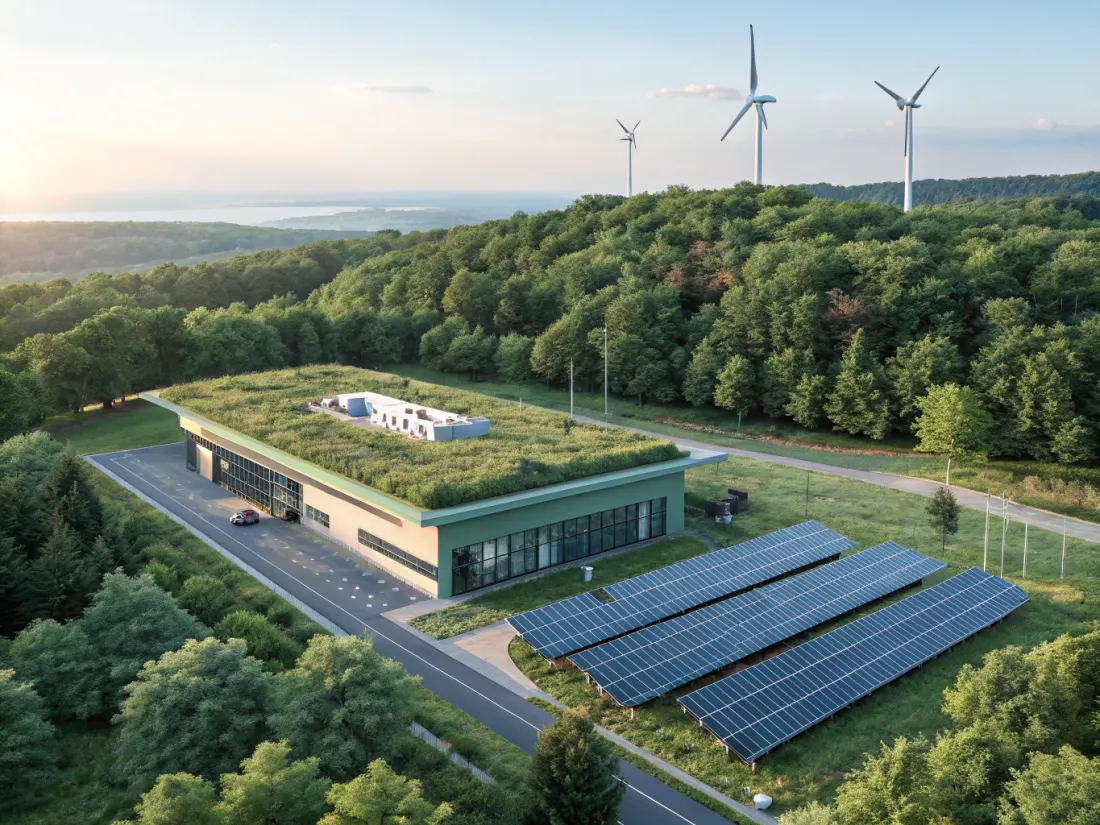
Digital has an environmental cost — and data centers are a visible link in the chain. But a data center is not doomed to be power-hungry: well designed, it can become a model of efficiency and valorisation.
Measure to manage: PUE
PUE (Power Usage Effectiveness) measures a data center’s energy efficiency: the ratio between total energy consumed and that actually used by the servers. The closer to 1, the more efficient the facility. It is the reference indicator to optimise from the design stage.
Choose low-carbon energy
A data center’s footprint depends largely on the origin of its electricity. Favouring low-carbon supply — nuclear, renewables — drastically reduces emissions, at equal power.
Recover the heat
Rather than venting server heat, it can be reused: heating networks, greenhouses, buildings. This recovery turns a loss into a resource and improves the overall balance.
Design frugal from the start
Sustainability is decided upstream:
- optimised cooling (free cooling, liquid cooling);
- frugal architecture and equipment;
- landscape integration and limited artificialisation;
- responsible water management.
An asset, not a constraint
Far from a brake, sustainability has become a decision criterion — for operators and territories alike. A frugal, well-integrated data center is better accepted and more durable.
Key takeaway
Reducing a data center’s carbon footprint rests on four levers: measure (PUE), decarbonise energy, recover heat, design frugal. Anticipated together, they make digital compatible with the ecological transition.
Read more: our approaches to the sustainable data center and waste heat.