
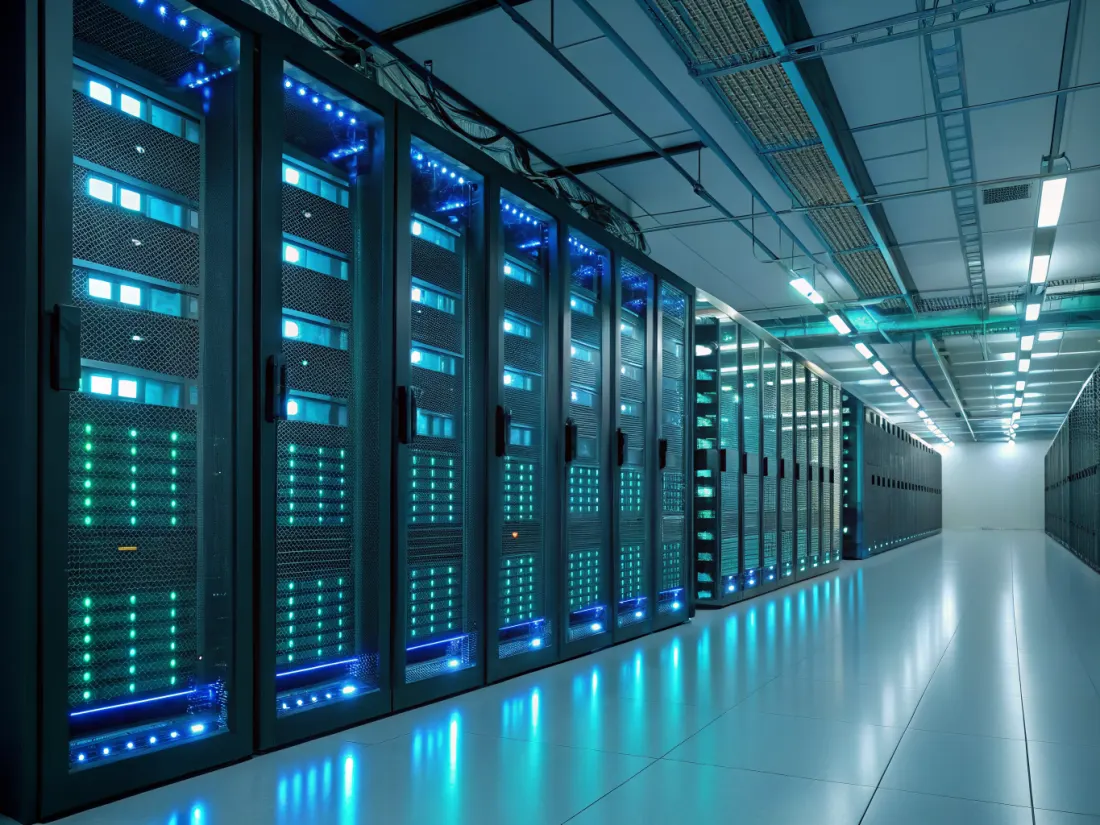
In just a few years, generative AI has moved from the lab to everyday life. Behind every model response lies a vast physical infrastructure — and an unprecedented demand for data centers.
Training and running a model is power-hungry
Two phases explain AI’s appetite for compute:
- Training: teaching a model takes weeks of computation across thousands of graphics processors (GPUs).
- Inference: every user request in turn draws power, at very large scale.
The result: capacity needs that now reach hundreds of megawatts for the largest projects.
GPUs change everything
An “AI” data center is not like a classic one. GPU servers are far more power-dense: they concentrate high electrical power in a small volume, which requires:
- a rethought power supply;
- reinforced cooling (often liquid);
- a specific building design.
A matter of sovereignty
Hosting this infrastructure close to usage, in France and Europe, has become a question of digital sovereignty: keeping control of data and critical capacity.
Reconciling AI and sustainability
Power does not rule out efficiency. The levers exist:
- low-carbon energy;
- energy-efficiency steering (PUE);
- heat recovery to supply the territory.
Key takeaway
AI is not a usage bubble: it is an industrial transformation that calls for new infrastructure — dense, sovereign and sustainable.
Read more: our expertise on data centers for AI and power connection.