
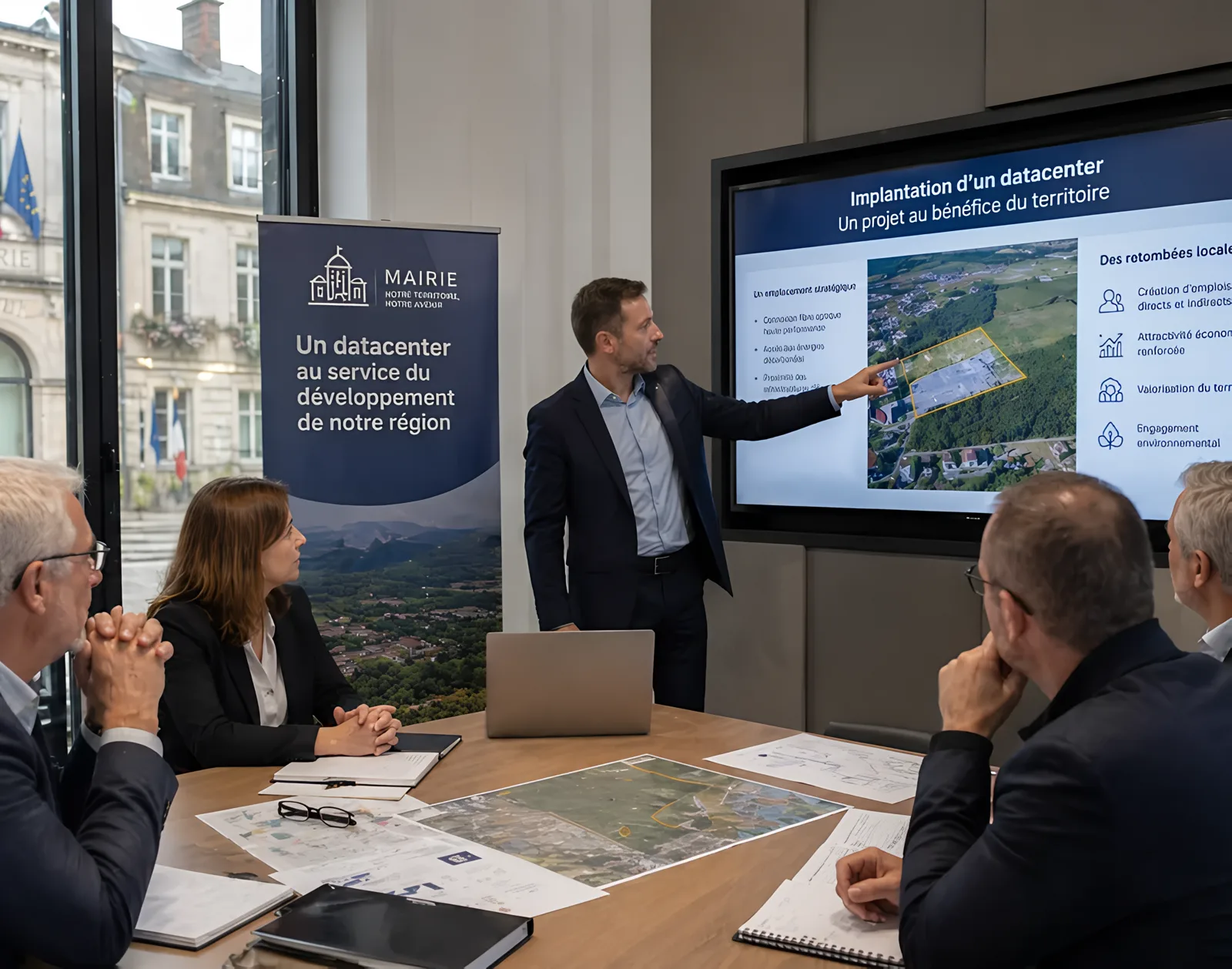
A data center project brings as many opportunities as questions. Investment, jobs and tax revenue on one side; land, energy, water and acceptability on the other. For an elected official, the goal is not to endure these projects, but to keep control of them in order to capture their value.
Why data centers are looking to territories
Demand for compute power is soaring, driven by cloud and artificial intelligence. The Paris region concentrates most installations today, but land and grid saturation are pushing operators to seek new sites in the regions.
What developers look for is precise:
- vast, available land, ideally already serviced;
- a nearby high-voltage power connection;
- access to fibre;
- a territory ready to engage.
The benefits for the territory
Well framed, a data center is a long-term economic asset:
- Lasting tax revenue across several mandates;
- Jobs, direct and indirect, and local skills development;
- Digital appeal: a connected territory attracts companies and talent;
- Energy valorisation through waste-heat recovery.
Points of vigilance
A poorly framed project can weigh on a territory: pressure on land and grids, energy and water use, land artificialisation, and sometimes local opposition. These risks are not inevitable: they are addressed upstream, through a clear framework and balanced negotiation.
The method: keeping control, step by step
- Shared diagnosis of the territory’s potential (land, energy, networks).
- Independent assessment of the project and the operator.
- Framing and negotiation of conditions (taxation, jobs, heat, environment).
- Decision support, in full autonomy.
Our role as an independent trusted advisor: to inform officials’ decisions, never to replace them.
Key takeaway
Hosting a data center is a strategic decision, not just a land matter. With the right support, a territory can turn a complex project into a lever for lasting appeal.
Read more: our dedicated support for local authorities and the economic benefits of a data center.